Thursday, October 22, 2020

election 2020


I haven't written anything in over a year. The state of the world being one of dystopian pandemic and political hellscape has done a number on my motivation to do things that I enjoy. And it should be said that I am not even close to the most impacted by this environment. For the most part, the issues being debated and stakes of the upcoming election have a much smaller effect on my daily life than many people. And I am still exhausted. I cannot begin to imagine or attempt to put into words what others are experiencing. And I also shouldn't; it is not my place to speak for what anyone else's experience in this world is. So while I cannot and will not do that, I want to attempt to put my own thoughts into words for you, as jumbled as they may be.

Four years ago, around this time, I wrote a post dissecting my approach to the 2016 election. Now, my approach back then was different for a number of reasons. 1) Living in a red state that many hypothesized could be swayed to a third party candidate allowed for a different perspective on voting power than my blue, federally unrepresented district vote now requires. 2) Though I was still largely left-leaning then, my political beliefs were much different at age 21 than they are now at 25. And 3) though at the time, I did see Trump as a threat to human rights, I now also see him as a threat to democracy and fair governing. 

There is no way I could ever vote for Trump. In fact, a large part of my approach to the upcoming election was convincing myself that I could vote for Biden. It's important to note here that this comes with some privilege. For many people, voting for Biden (and having others also do so) is their only option to maintain important rights, including the basic right to life. But admittedly I do still struggle to look his history with hateful/racist policy and sexual violence. I hate that I have to vote for someone who I morally object to in order to prevent another four years of someone I find much worse and dangerous. But at the end of the day, I think that is what is required to save lives.

So I am going to start with a point many can agree with: the two-party system is flawed and needs to go. It leaves many voters with choices they are not happy with. I long for a system better than this. With that considered though, it is the game we are currently playing in and it has real life consequences. What I have to say next may come from a place of my own values and biases, but I hope what I have to say is helpful for people who are in the middle ground or undecided about what to do this year.

In my attempts to become Christlike and emulate the qualities of Christ that I value: charity, honesty, kindness, faith, diligence, knowledge, etc., I have discovered that these traits and principles have informed much of my own social and political perspectives. Christ sat with the most downtrodden members of society and cared for them and their needs fully. I fear that modern Christianity has twisted many of the teachings and stories of Christ to fit a narrative that is not true. Christ was a radical, a criminal, a refugee. He was so many things that would be rejected by modern society and often by communities and institutions that proclaim to be acting in His name. For me, emulating Christ in my own life looks like trying my best to care for those who society rejects no matter the consequences. I am definitely still working on that.

My approach to voting this election is not just about what is going to provide the best outcomes for myself, but for everyone. What we can all do is listen to people about their experience with structural disenfranchisement, believe them, and then make decisions based on what they have told us is going to be best for their communities. The revised version of the golden rule rings true in this instance. Do not treat others how you want to be treated, treat them how they want to be treated. People are constantly speaking on what they want and need to dismantle systemic oppression (racism, homophobia, transphobia, xenophobia, ableism, misogyny, and more). It is our job to listen and act. By prioritizing the values and policies that people who are impacted most by the systems we have in place prioritize, we will establish a more egalitarian and humanistic society.

This also is reminiscent of the concept of universal design. When we create structures and systems making them equitable and accessible for the most marginalized groups, those structures and systems will function better for everyone. I think many US voters want to know who and what will benefit them the most on a personal level. I am far more interested in who and what will benefit us all. 

It is important to note here that Trump struggles and hesitates to denounce white supremacy (source), calls on white supremacists to “stand by,” a call they have taken as a call to arms (source), reverses rulings that protect healthcare for the trans community (source) and disabled community (source), is running on a GOP platform to reverse the court case that federally legalized gay marriage (source, pg. 31-32), supports taking away rights to reproductive healthcare (source), attempts to strip and remove DACA protections (source), separates families leading to hundreds of missing children (source) and countless other things that will take away basic human rights for many people. We cannot claim to love and support marginalized groups while supporting their endangerment by the people we put in power.

But one of my big concerns with Trump overall is not just that he would be implementing policies that I don’t agree with (that would literally take away people rights and/or put them in physical danger), but that he would be doing so all while slipping into a more and more authoritarian rule. If for nothing else, a refusal to support Trump protects democracy. Advocating for postponing or cancelling elections, posting about the desire to serve more than two terms (even if joking), and refusing to commit to a peaceful transition of power are all things that we need to take incredibly seriously, even if you do not believe he is being serious. These things cannot be tolerable at any level or in any fashion and a vote for him is an endorsement of those claims. Allowing it now only makes him feel that it is more allowable for him in the future. 

In much fewer words, I can move past my personal issues with Joe Biden because I also know that his presidency will be far safer for the American people, in policy and in commitment to democracy itself.

Now these words are for Trump supporters (if you even made it this far) and anyone else who needs to hear it. I do not trust anyone who votes for Trump in this upcoming election. It isn't even really about politics, but a clear difference in our moral outlooks on life. I do not trust you with my own identity and life; I do not trust you to be fully loving and welcoming to anyone else that may be a part of my life now or in the future. It is a matter of safety. And if I do not trust you, you can only imagine how far that distrust may go for people in more marginalized communities than my own. I am very privileged around you. I still do not trust you. If you do not understand or accept that, you are free to remove yourself. 

This is a man and a platform that threatens human rights in a very real way. I understand that many voters have issues that are extremely important to them but the willingness to trample over marginalized groups in favor of those issues is indefensible. The stark individualism on which the US was built is suffocating us and causing many to forget what is most important. To bring it back to faith and spirituality, we have been commanded to love God and love our neighbors. I do not think it is possible to fully and truly love all your neighbors and vote to strip away their rights. So for me this is not about politics, but about moral responsibility. I desperately wish I could say that it’s just a difference in opinion, that I can be friends with someone no matter their political leanings, that I could feel safe no matter what. I wish it was that simple, but it just isn’t. My goal will always be to truly love my neighbors and my community. For me, it is inarguably clear that the way to do that this election is to make sure Trump is removed from office.

Saturday, August 10, 2019

on grad school, isolation, and priorities


In isolation, one learns a lot about themselves. The biggest thing I've learned though is that I hate isolation.

Over the past two years, I've become extremely familiar with loneliness. I have spent so much time either completely alone or feeling like I am. Not because there aren't people around or even that I've had a hard time making connections out here in DC, but because I do not let myself embrace that connection. This isn't particularly new for me. I've always had a hard time meeting and opening up to new people. I've always had lurking thoughts in my mind about how despite all of the great friends have had throughout my life, the truth is I'm alone at the end of the day. But somehow it feels different when you spend nearly 9 full months commuting 3 hours round trip to an internship that stresses you out with only your thoughts to keep you company.

Grad school has been an incredibly draining experience. While I haven't been entirely secret about it, a lot of you don't know the depth of the stress I have experienced since moving to DC, especially in the past year. I have about a week left before I complete all of the requirements and the end could not come soon enough. Yet, even though this ending is providing much needed relief, I am still paralyzed by the future. I am trying to figure out what is really important to me, what I really want, and who I am, all while being petrified by too few digits in my bank account and impending rent deadlines. And it turns out it's kind of hard to figure out what you want to do with your life when you can't even decide whether or not it's financially responsible to get yourself lunch at Taco Bell. A friend asked me what my biggest priority is right now and I didn't have an answer. In fact, the question stressed me out so much I shut down the conversation and went to bed.

But I think the truth is my biggest priority (outside of making sure I can afford rent next month) is feeling like I belong. It's kind of funny how spot on Abraham Maslow was when he first drew that pyramid. I want to feel loved and appreciated. I want to feel connection and companionship. In fact, those things are critical to growth. I need them for my own health and progress. I also need to get my own anxieties in check to make it happen. Spending two years either physically or mentally isolated, though not constant, has not been easy on my poor brain, especially the parts that spit out lies and worries. My brain thinks that it's being helpful, that it's keeping me safe from pain. But, no surprise, the constant stress tends to cause more damage than it remedies.

I have never been a very open person. Vulnerability scares the hell out of me and I keep most of what I am feeling locked down. Writing has given me somewhat of an outlet, but I still largely "suffer in silence," as the people would say. And that's not at all healthy. I know it's not. I've been stuck in this cycle for years. I don't know how to process my emotions, I don't know how to advocate for my needs, and I don't know how to express myself effectively when I am not hiding behind a screen (and sometimes, I can't do so effectively even with that degree of separation). I have dug myself into a pit of self-pity and isolation and I don't know how to get out. I guess that's something for me and my future therapist to find out.

ᐁᐃᐁᐃᐁ

As I sit here writing, I am trying to figure out why. I don't know my reason for sharing this. Maybe it's my own way of processing. Maybe it's a futile attempt to feel better about the life changes ahead of me. Maybe, and most likely, it's me reaching out my hand and hoping that what I have to say resonates with one of you reading this. I'm not quite sure.

But what I do know is that people are important. And in the same way that I am willing to support others need for love and affection, I have to be willing to do so for myself. One of the hardest things I have had to learn and am still learning is that I am worthy of the same respect and care as others. It's so easy to view the people I love as worthy of compassion. The real hurdle is seeing myself in that same light. I am worthy of compassion, of love, and of respect. There is nothing that makes me less worthy than anyone else. It's a tough pill to swallow.

I can't say that after writing this my life and perspective on connection will have changed. If it was that easy, I would have changed my ways years ago when I first watched Brené Brown's TED talk on vulnerability. I will probably still have anxiety about connecting with people. I will probably still hide a lot of my stress and pain. I will doubt my worth and question whether or not my friends actually like me. But writing it and putting it out there will hopefully help me internalize this point a little bit more: having people you love and trust is crucial. Love and belonging is an innate human desire. I am not silly or needy when I feel like I need more attention and affection. And it's okay for me to ask for it.

Friday, September 28, 2018

it wasn't that bad.


First, I want to say sorry. Sorry for not telling the people who care about me about this before posting it online. Sorry for not being as much of a fighter as I thought I would be. Sorry for only talking about this now.

Last year I was sexually assaulted. Only I don't really feel comfortable calling it that. It wasn't violent. It ended quickly. I didn't fight back. It wasn't that bad.

Just two months ago I lied to my parents. In a debate about honor code violations and sexual assault at BYU, I told them that I had broken honor code rules, but was never assaulted at those times. But I had been. As soon as the words came out of my mouth I knew I was lying. Because it happened. I have denied it, I have pushed it down. I have told myself that I probably could have stopped it, so it was my fault that I didn't. I have carried this with me, mostly alone.

But before I tell you that story I want to tell you a couple different ones.

High School

Throughout high school, I was consistently sexually harassed by one of my peers. I blew it off because I thought he was cute and knew that he talked that way about a lot of other girls in our class. He made comments about my body, about having sex with me. When sitting near him in class, I knew these comments were likely, but I convinced myself it wasn't a big deal. I even recall joking to a friend that I could "probably get him in trouble for sexual harassment if I reported it," but I didn't want to be that girl. He was smart and popular. But what was the point of doing anything about it? It wasn't that bad.

College (Sort of)

Right after I graduated while I was still living in my college town, I took a trip with roommates to Las Vegas. It was a birthday trip and we had gotten into a swanky club as VIP (thanks to a wonderful stranger, but that's another story). Now while in a club, it is pretty common to make contact with other people, often just dancing and having a good time. It is also fairly common to be touched when you do not want it. And I still remember how it felt to try and pull another woman's hand away as she tried to reach up my skirt while she whispered in my ear "we're both girls, so it's okay." It wasn't okay, but it wasn't that bad.

I share these mostly because I need to get them off my chest. My experiences are definitely not limited to these things, but these specific ones stick out as the most consequential in my life. I consider myself lucky. I haven't had to deal with half of the garbage many of my friends have. My experiences are limited and I'm grateful.

And that brings me to my final story.

Like many young single Mormons, last summer I was feeling the pressure to date as well as the natural human desire for affection. I downloaded a popular Mormon dating app, Mutual, and I started swiping. I matched with this one boy who was cute, tall, and a returned missionary. He reached out and while we talked for a bit, I ultimately blew him off. But then a few weeks later, he messaged me again and asked me out. I agreed and we spent some time together up Provo Canyon. I had a good time and I thought he was attractive, so I reached out to him again. This time we ended up making out at my apartment. After a while, he started touching me in a way I did not feel comfortable with. My thoughts were racing. "What is he doing? How do I tell him I don't like this? What will he do if I tell him to stop? What if he gets upset?" Fortunately in the time it took me to mentally ask myself these questions, he had stopped. He eventually left and we never spoke again.

The next morning I remember telling one of my best friends what happened. I didn't give her all the details, but I did tell her I felt guilty. We blew it off as "Mormon girl shame." But by that night, I knew it wasn't just that. Something had happened to me that I did not want and did not consent to.

But it didn't last that long. It wasn't that bad.

I have had every doubt and every victim-blaming thought pass through my head. I still don't really feel like I am a victim or survivor. I still rationalize that what happened to me isn't worth speaking about and doesn't qualify for any definition. I keep coming back to the same thought "it wasn't that bad."

But what if it was? What do I do then? The answer is I don't really know.

As I watched the Senate Judiciary Committee question both Christine Blasey Ford and Brett Kavanaugh, I was brought back to my own experiences. Is what happened to me noteworthy? Am I overreacting? Was it my fault? If a woman can come forward with credible allegations of events much more serious than my own, where does that leave me? Would I be believed? Would I be mocked?

I find myself asking questions that shouldn't have to be asked at all. And I guess that's my answer.

None of these things should have happened to me. I shouldn't have to be grateful that at least it wasn't worse.

Watching women be questioned and doubted and retraumatized is painful. I have so much admiration and appreciation for what Dr. Ford has done. She is speaking up for herself, her country, and any other individual who has experienced something like this. I believe her. I stand with her. I am terrified that we are willing to allow sexual abusers to attain lofty positions of power in our government. Yet, I am empowered to share my own story. I share it for everyone who has gone through similar things. I share it for those who still question if their experience was bad enough to count. I share it so I no longer have to carry this burden alone.


If you are having a hard time with the current news, anything I shared in this post, or anything in your experience, please reach out. RAINN's hotline operates 24/7 at https://hotline.rainn.org/online/ or you can call 1-800-656-HOPE(4673). 

Thursday, February 15, 2018

the year of empathy


First off, let me say, that I am fully aware that we are halfway through February. Secondly, I did start writing this a month ago but I never got around to ironing it out and posting it so touching on a New Years theme hopefully makes sense with that context. But I feel like this issue is ever important, so better late than never.

Starting a new year involves resolution-making, purging, and renewing for many people. Something I've seen many do is choose a word to use as their guide throughout the year. Seeing these caused me to reflect on what word might be the guiding beacon for me this year and I decided pretty immediately that it would be empathy.

I feel like empathy is something we all kind of pretend to understand and be good at. We know the textbook definition.We know that it is different than sympathy but we still interchange the two when it comes to our behavior. We expect empathy from others but really can't be bothered to extend it in return. And I think that is mostly because empathy is so active. It's not a gut reaction. It is thoughtful, active, and can often take time. 

Take into consideration pretty much every social issue currently in the news. It is my ~assumption that with empathy, these issues could be worked through a bit quicker than the pace we are currently at. But the truth is, empathy is hard. And not just like "my arms are weak and I can't lift this heavy box" hard but "imagining myself in your situation is emotionally exhausting and I am struggling to take your burden upon myself" hard. And we often don't truly consider the weight of these emotional burdens. But you also have to remember that no matter how hard imagining yourself in someone else's position is, actually BEING in that position is harder. In fact, a part of privilege is not actually having to be in those positions. But we sometimes take that to mean that we don't have to care about it either. It doesn't affect us so why waste the time? Because that's what good people do. They look outward. They empathize even when it's hard.¹

Empathy creates a space for work. When we truly empathize with another's difficulties, especially with the difficulties faced by entire groups of people, it is selfish to walk away without offering some form of assistance. For social issues, this can be small actions such as having conversations or larger actions such as donating time and money to just causes. And yes, with awareness of issues and the employment of empathy comes responsibility. And sometimes ignorance is easier (an idea I talk about in depth here), but we cannot allow ourselves to turn away. 

So for me, 2018 is a year of empathy. A year of employing it, strengthening it, and teaching it. When I read stories of abuse and marginalization, I will not imagine what I would do in their situation, I will imagine what I would feel in their situation. It is a subtle difference, but it might just change everything. 


¹Having a background in psychology, I know that empathy can be really hard for certain people. That's totally understandable and do what you can. 

Friday, October 6, 2017

awareness and responsibility


This past week has been a roller coaster of tragedies and political issues. Among the headlines, Puerto Rico and the destruction of Hurricane Maria, Las Vegas and the concert shooting, abortion legislation, Congress scandals, NFL protests, and Trump's horrendous response to all of it. It's exhausting for even the less politically involved of us. There is an endless supply of causes and movements to get behind, you just have to pick one or twenty...

I want to discuss something I've been studying in one of my classes this week. I am taking a course on the theories of counseling and psychotherapy. Specifically, this week we discussed Existential and Gestalt theories. In both there is a strong emphasis on awareness. In regard to therapy, this typically means an awareness of yourself: your personality, desires, and behaviors. But it also encompasses an awareness of the world around you. Gestalt theory points out that awareness directly translates into responsibility. Once you are aware of your circumstances or issues, you are then burdened with the responsibility of changing and improving. This vaguely resembles the cliche phrase most of us have heard, "the first step to solving your problems is recognizing you have them." I guess that makes responsibility for change step two.

But this was almost epiphanic for me as I am sitting in class and my mind immediately shifts to the topic of privilege. For my purpose here, let's define privilege* as unearned benefits attributed to members of certain social groups. Privilege is what allows you to "not be into politics." It allows you to sit on the sidelines and not choose a team to root for. Or, more commonly, sit on the sideline and root for a team you don't know much about. But the problem with learning about the teams is the duty that comes with it. Awareness does not just mean responsibility for yourself, but for others as well.

If you listen to women's experiences with sexism, you are then responsible for change. When you listen to PoC talk about their encounters with racism, you have to do something. When you learn of the hatred the LGBT community faces, you must be a part of the solution. When you consume statistics and stories, all of that information pushes you to action. So we choose not to listen and we choose not to understand. We choose ignorance because it's easier. When you don't acknowledge the cracks in our nation's foundation, you can continue living guilt-free. Because when everything collapses, you get to claim that you didn't think there was a problem in the first place.

Activism is emotional, and occasionally physical, labor. It's not easy. Engaging in movements and speaking up for your beliefs opens you to harassment and ridicule. It's an emotional vulnerability that opens the gates and let's people in to attack you at your core. But between comfortable ignorance and grueling awareness, I will choose exhaustion every time.

Though activism may be hard, it is just as rewarding. Having a strong belief system and something to stand up for are irreplaceable experiences. Being politically focused has made my life feel purposeful even when I have nothing else pushing me forward. If we are all living in this world, how selfish is it to not be informed on the ways we can take care of it and each other? And the key here is being properly informed.

I would invite those of you who have read this far, to learn something new about politics this week. Find statistics, look at sources, listen to stories, and engage in conversation. Read articles with an open, yet analytical, mind. Whether the information you find pulls you left or right, make sure the information is valid. Gather from a variety of sources, especially individual experience. Really think about what you believe instead of following what family, friends, or institutions tell you. Develop a belief system that fully belongs to you.

Most importantly, develop your beliefs and values with both your mind and your heart. Put love above all else. Do not merely preach a love for country, but a love for all the people in it. Recognize their humanity and their needs. And most critically, do not let your personal desires keep you from seeing what it best for everyone. If our main focus in life was supposed to be ourselves, we wouldn't have been put here with seven billion other people. Our goal should be to create systems that work best for everyone, and sometimes that's gonna involve personal sacrifice.

So make yourself more aware and take on some responsibility. Arm yourself with knowledge and conviction. Take shelter when you need to, recuperate, and rejoin the flanks. It's an emotional, selfless, and tiresome battle, but it's fought with love and truth.


*For more information on privilege, visit this site. It's long and imperfect, but informative.

Wednesday, September 20, 2017

shame and the gospel


Recently, I have had lots of questions regarding the gospel. They vary in topic and most I keep to myself. But about a month and a half ago, I got the nerve to throw some of these questions into the strange void that is twitter.com. Here is a screengrab of part of that thread (yes, my name here is "freakin bats." please try to ignore that):


I posed these questions partially hoping for people to respond with their perspectives but mostly just to throw out some thoughts I was having in hopes I wasn't alone in questioning things. Side note: If you have thoughts on Heavenly Mother and both the doctrine and culture surrounding her, I would love to chat.

However, the response that struck me most, was from a girl who has since blocked me and protected her tweets so I cannot include a screenshot of her reply. She indicated that she was tired of sacred things being questioned and called out as sexism. She felt that if I were faithful enough, these questions would not matter. And naturally, I was pretty upset. I felt like she was saying that my questions and concerns were not worth discussing and that my inquiry was due to a lack of faith. And I felt the opposite. I felt that I had faith in something and someone I do not know much about. I was asking questions, from my perspective, to gain understanding about something I feel very strongly about. And my questions were tossed to the curb and labeled as unfaithful. It hurt.

Questions and doubts are topics that are briefly discussed by church leaders. We are told to doubt our doubts (ref) and questioning in public spaces is discouraged. We are told that having questions is normal but are dismissed when we ask the hard ones. Most questions starting with the word "why" are answered with the direction to pray and gain a testimony for ourselves. And these things aren't inherently wrong, they are just limiting. Hard questions obviously are tough to answer. And I think that often, the questions we ask are questions the people we are asking have as well. But I wish that didn't have to mean we stay quiet.

I want to know why I am not supposed to say certain words. I want an explanation of how a few inches difference in hemline can determine righteousness. I want someone to explain to me why some forms of caffeine are acceptable while others are not. I don't want to follow commandments without understanding them. To me, the commandment to love one another seems like the most, if not the only important one, yet the most ignored. And I just want to understand why the directions we're given that to me seem petty or annoyingly specific get more attention than commandments as simple and powerful as love.

The fact that I am not satisfied with blind obedience may be a personality quirk, but I have the feeling I am not alone in feeling this way. In fact, I am sure that many people have these same questions in addition to many of their own. And I think it's leading many, especially individuals around my age, to leave the church altogether.

By leaving questions unanswered and unaddressed, we tell people that they need to figure things out on their own. And they may come out of that with stronger faith and a better understanding. But they could also end up confused and discouraged.

At this point in my personal and spiritual development, I do not blame those who leave the church when they have doubts. Being a member can be hard. We act like it's not, but it is. ("We" referring to the general church population). And then we judge people who leave for not being strong enough or not having enough faith. Or even more likely, we just do not understand how it's even possible that someone could walk away from something that brings us so much joy. We view leaving as a failure and a betrayal. As a whole, we really are just bad at letting people decide that a different lifestyle or belief system is better for them than Mormonism.

Mormons do not have a monopoly on truth. In fact, we get things wrong fairly often, I think. And honestly, every member has a different idea of what truth even is. We need to stop shaming people for asking questions and subsequently shaming them if they choose to leave. We need to let people discover their personal versions of truth. We need to ask and answer hard questions. Asking questions is how we learn and grow. Progress is impossible without inquisition. If asking these questions brings people closer to LDS doctrine and increases their faith, that is wonderful. But we need to remember that questions might have the opposite effect for some people. And that doesn't make them weak or wrong. It just means that they are still on the journey to find what lifestyle works best for them. And really, we all have that in common no matter what we believe.

Monday, August 7, 2017

lessons from utah county


I want to write something special but I am at a loss for words. In a week, I leave the most important work experience of my life for the last time. Two days later, I drive out of Utah, my home of the past four years, for good. I am overwhelmed. I am excited, terrified, miserable, and sure. Today I cried listening to For Good from Wicked and watched 6+ episodes of Parks and Rec. I am completely unprepared for what the next few weeks have in store.

The past month has been emotionally draining. I've been entirely lost and somehow totally sure of where I am at the same time. With the promise of a new adventure on the horizon, Utah has begun to feel like a second home (Kansas will always be number one for me).

I have learned a lot during this time of my life and I don't know how to organize it. So I am going to word vomit and hope it sounds okay.

Spend as much time in the mountains as possible. It is healing and celestial.

When given the opportunity, stay up late and watch multiple Disney Channel original movies in a row with your roommates.

The things you do aren't as important as the people you do them with. The friends you have reflect who you are and what you will become. If you hang out with trash people, you will become a trash person. Hang out with good, kind, passionate individuals and they will support you in being the same. Do the fun things, but make sure your focus is on who you are with.

Immediately find the best fries in whatever city you are living in. When sad, eat those fries. But also be open to trying new fries. Basically just eat lots of fries.

Self care is good. Netflix binge-ing by yourself falls under this category and anyone who says otherwise can go.

Do not give your time to people who do not respect you or your boundaries, emotionally or physically. They do not care about you. They are not your friend. There are so many people who will ask you what you are comfortable with and respect your answer. They will ask you if you are okay with hugs. They won't push you to go out when you want to stay home. And when you find these people, do not let them go.

Follow up: believe your friends when they tell you someone has disrespected their boundaries. Be there for them.

Always go on road trips. Doesn't matter where you go.

Treat yourself when you can. Especially when it comes to buying shoes. I am always in support of buying shoes.

Get involved in politics. National, state and local. Vote when you can (which should be always). Challenge your own views and the views of others. Stand up for your beliefs but listen to everyone else too. Let your opinions change and definitely don't get mad when others do the same. That's not flip-flopping; it's growth.

Go to class, but also skip every once in a while. It's fine.

Find a place to nap on campus. If you are at BYU, the periodicals section of the library has some leather couches behind the bookshelves that I highly recommend.

Try new things and don't give up when you are bad at them. I'm still learning this.

And lastly, though the sentiment is overdone and cliche, be yourself. There is no good reason to not be. Everything strange and rough and imperfect about you makes you incredible. Do not betray that.

Saturday, June 3, 2017

political progress through empathy


Something I've tried recently is listening to arguments without responding in affirming or contradicting ways. I simply respond "that's an interesting view" or "I've never considered that perspective" rather than immediately jumping into an argument or an echo chamber-esque conversation. While doing this, it occurred to me that it's not something I, or most people, do often enough.

When we listen, we often do so with the intent of responding not hearing. This is damaging in any setting, but is increasingly present in political discourse. We are on the constant defensive. There is an urgent need to defend what we believe and attack those who disagree with us. But this doesn't offer much room for growth. When we listen with the intent of responding, we don't really hear others' concerns or beliefs. We are self-focused which limits the possibility for connection and understanding.

One of the most frustrating things I see in political discussion is the belittling and silencing of experience. Many individuals from marginalized groups are stepping forward to tell their stories. Often, these people are invalidated and dismissed when people do not feel comfortable with the accusations their stories make. It is so much easier to deny validity than take responsibility.

We need less politics and more empathy. 

First, we must recognize that when we are discussing heated topics, we are typically talking with people who care as much as we do. Whether you agree with a person or not, they feel as strongly about their stance as you do about yours. When we remember this, we can be more respectful and productive in our discussions. 

We also need to realize that despite political leanings, feelings are always valid. When someone feels discriminated against, we need to listen and support. All too often, we jump in to defend ourselves. When someone speaks out on their experiences with racism we respond with "but, I'm not racist." Or someone expresses concern about sexism and we respond #NotAllMen. We don't listen to hear, we rather respond quickly to clear our own consciences. And this solves nothing. 

Empathy, however, has power to change. We can change ourselves, our behavior, our minds. With empathy, we are no longer on separate teams trying to win governmental power; we are on the same team, fighting for what is best for all. You do not have to fully understand or agree with someone to validate and empathize. Empathy is not uniformity, but it is unity. 

It is essential to a peaceful existence that we recognize the humanity in everyone we encounter, no matter how different they might be. People are not political obstacles; they are people. The sooner and the more frequently we realize that, the more cooperative we will be and the more progress we will make.

So next time someone speaks out about an issue, whether you agree or not, truly listen before you respond. Validate that persons beliefs and recognize their humanity. Evaluate yourself and your stance on the issue. Then have productive conversation. Do not jump on the defensive, but slowly and thoughtfully analyze contradicting viewpoints together. 

If we truly want a government built for the people, we have to first listen to the people. When we are empathetic, we solve more problems, we are more united, and we truly progress.

Saturday, January 28, 2017

pro-life


No, we are not talking about abortion. If you want to know my view on women's healthcare, ask me at another time.

Right now, we are talking about the millions of other lives that are now under direct threat due to the Trump administration. I'm done treading lightly on this topic. We've dug ourselves into a huge, racist hole and now we have to fight and claw our way out.

Due to Trump's reckless immigration related executive orders and presidential memoranda (1) (2) (3), immigrants, refugees and US residents trying to enter the country are facing major discriminatory roadblocks. Green card holders are being detained in airports and kept from visiting their former homes (source). A woman, distraught at the idea of returning to her country of origin, attempted to end her life at the airport where she was notified of her deportation (source). Vetted refugees who were in the air when the order was signed were detained upon landing (source). These regulations are ruining lives and ending lives.

This executive order does not keep bad people out of the US. It keeps good people who have already completed a thorough vetting process from entering our country. For reference, here is the refugee screening process established under the Obama administration. It is already difficult for refugees to be accepted into the US and this order achieves nothing but hate. Not to mention it's illegal (source).

But instead of throwing more sources at you, I will proceed to my point. If these orders do not bother you, you are not pro-life. If these stories of individuals being denied refuge and being blatantly discriminated against based on their place of birth do not bother you, you are not pro-life. If you support this illegal use of immigration policy, YOU ARE NOT PRO-LIFE.

You are racist. You do have a single story of what people from other countries, specifically those associated with Islam, are like and what they believe. You are making yourself complicit in the discrimination against these individuals and any subsequent actions taken by our current president.

Do not spout your pro-life rhetoric to me unless you carry your same "respect" for life across the board. I don't want to hear about how your priority is saving children and making sure they are afforded the opportunity of life, if that view does not include refugee children. I understand why you are pro-life in regards to abortion. But I do not understand why you cannot seem to generalize that idea to children not conceived in the United States.

This is a gross generalization of pro-lifers, I get that. If you fight for life always, no matter the context, pat yourself on the back and continue to fight for what you believe. But if not, listen to what I am saying to you right now. Your view is hypocritical. You need to reevaluate. There are many lives out there, that need us to fight for them. If you want to call yourself pro-life still, be pro-life always; when it's tough, when it's unpopular, when it does not directly benefit you, and maybe sometimes when it's a little inconvenient to you. But do not tell me you're pro-life when you pick and choose which lives you are willing to fight for.

Muslim brothers and sisters, refugees, US citizens and residents who are scared of these policies and how they will affect your lives, your lives are important to me. I am here for you, I love you, and I will fight for you.


Tuesday, January 24, 2017

divine feminist


I am tired. Tired of being told that because I am a Christian I should have an understanding of why men and women aren't equal in society. It's because we're different right? We have different roles so I shouldn't expect equality? Actually, Christianity is fundamental to my feminist ideals.

A couple summers ago I took a psychology of gender course at BYU. Given the institution, this course contained many gospel discussions as well. Throughout my time in this class, we discussed the differences between men and women both physically and mentally. We discussed divine roles and societal views. And during one specific class, with tears in her eyes, my professor testified to us how she knows that God loves each of us in the same way and how because of this view, she knows that men and women are equal and deserve social, economic, and political equality.

Though many discussions in this class have stuck with me, this simple testimony remains the most powerful. It's what keeps me fighting and writing and marching (metaphorically since I was not able to go this past weekend). 

Genesis 1:27 "So God created man in his own image, in the image of God created he him; male and female created he them."

Men and women were both created in the image of God. We both have divine worth and qualities. No difference in value mentioned.  

And at the end of the day, this is all I need to know. I am Godly, I am divine, and I am equal. My feminism is tied to my Christianity and my Christianity is inseparable from my feminism. And yes, at times it may seem like they cannot coincide. But they are both a strong part of my belief system. 

So I take what I know to be true, both that God is loving and kind and fair, and that women are created equal to men and deserve that equality to be recognized politically, socially, and economically, and I fight for it. I encourage others to fight for it. I listen to women's stories. I see women of all shapes, colors, sizes, and genetic makeups and whether I agree with their lifestyles or views, I fight for their right to have those views and lifestyles. 

I pledge to mourn with those that mourn and comfort those that stand in need of comfort. To fight for women; white, black, Latina, LGBT, and anyone else, especially those unable to fight for themselves. I am driven by love. A love for my sisters and brothers, but most importantly a love of God. 

Wednesday, November 9, 2016

let's get to work


"If Donald Trump wins the election, I'm moving to (insert various, distant country here)." We've all heard it. I've even said it, but it is no longer a joke. It's a reality.

I'm honestly astounded at the election results. I sat on my couch for hours on end, tense all throughout my body and upset to my stomach, as the thought of Donald Trump being president slowly became a reality. 

Now let's ignore the fact that he is completely unqualified and oblivious to the way our government works. Let's ignore the fact that I disagree with him on most policy. Let's ignore his history of manipulation and failure in business. Ignore his temperament and lack of professionalism. 

Let's look at the fact that his presidency makes me and many others feel physically unsafe. Not just the fact that he is president, but that there are enough people who are willing to support and even celebrate his utterly hateful and divisive rhetoric, behavior, and policy. This is not okay. People should not be this terrified by the outcome of an election. People should not feel unsafe in their own country. Our president elect is an accused rapist. Our president elect is a white supremacist. Our president elect is a misogynist. I'm horrified and disgusted that it has come to this. I honestly never considered it as an actual possible outcome. I thought we were smarter, more loving, and more inclusive than this. 

But I say all of this in a very heated and emotionally charged state. My fingers are crossed very tightly hoping that this pain and heartache goes away. And when it does, I will be ready to work. Because heaven knows, we've got a lot to do. 

I do not expect any of you to respect him. I know that I do not and will not. But I will stand with my country and for what I believe in. I will love my fellow Americans. I will love and support people of color, the lgbt* community, women, children, immigrants, and refugees. And I will fight like hell for all of you.

Do not leave. Don't even joke about it. Leaving the US is saying you are not willing to fight anymore. Leaving is giving up. I'm not ready to do that. And I hope none of you are either. 

Thursday, October 27, 2016

november eighth


I've been thinking long and hard about the upcoming election. I haven't made any statements about who I'm voting for because I honestly haven't really known until now. But before I reveal anything to you, I want to talk about what lead me to my decision and things I have learned.

Image result for trump vs clinton

Rule number one: never trust a source that indicates its political leanings in its URL or title.
Rule number two: don't really trust any other sources either.

I learned that one of the easiest ways to really understand where you fall on the political spectrum is to read sources that you know are biased and find which ones give you a feeling of solidarity and which ones make you want to rip off someone's head. While living in Utah I have slowly been developing my political ideation and as most of you can probably guess, it doesn't quite align with the culture. In fact, the longer I live in conservative communities, the more liberal I seem to become. I'm not really one for going with the flow. And this has become increasingly clear throughout this election season. I cannot even scroll through Facebook without becoming irrationally upset about something someone posted. And so far I've had the decency to not argue with anyone. You're welcome.

For the record, I'm the last person to tell you not to vote third party. In fact, I strongly encourage you to do so if you feel like a third party candidate is more suited for presidency. Because let's face it, the options we have been given are less than ideal. Both major party candidates are plagued with scandal and mistrust. So I started looking into third party candidates. But the problem I quickly faced was the lack of left wing leaning third party options, or at least ones that I could see myself behind.

I decided that I wanted my vote to both voice my political opinions and influence the outcome of the election. In Utah, that leaves me with three choices: Donald Trump, Hillary Clinton, and Evan McMullin.

Image result for donald trumpDonald Trump angers and disgusts me to my very core. Hearing him speak, seeing his face, even reading words from his supporters fills me with an insane amount of rage. I knew from the very beginning that there was no way he could ever earn my support. If his policies and beliefs weren't enough to dissuade me, his impossible temperament and character sure did. He has never been a justifiable option for me and I don't understand how he is for anyone else. But I'm not going to turn this post into a Trump bash. You're also welcome for that.

Image result for evan mcmullinEvan McMullin has shown upstanding character and this initially made him appealing. But unfortunately, I agree with him on very little policy, which, believe it or not, is still important in this election. I'd also like to point out that it seems to be that many individuals (not all, don't fight me on this please), specifically in Utah, have decided that he would make a good president merely because he is Mormon. Sadly, his religious affiliation is not a valid qualification for the office. Sorry, Mitt Romney.

Image result for hillary clinton 2016Finally we come to Hillary Clinton. She has been under political scrutiny for the majority of her career and a good portion of her life. The name Clinton is laced with scandal and conspiracy. I recognized this and judged her accordingly. But then I realized that the only reason I disliked her, was because I was being told to. I had no idea why I hated her. So I stopped doing so and looked from a clean slate perspective. Tabula rasa, if you will. And I realized that our political standpoints line up pretty well. 85% if you ask Isidewith.com. And I also realized that I am going to put faith in our governmental system; though I still plan to be judicial in that matter. But if the FBI says that there was not sufficient evidence to indict her, I am going to believe that. And I am not going to judge her based on the actions of her husband. I am going to judge her based on my own perspective. I'm going to look at what she has done in her career. I'm going to look at her proposed policy changes. I'm looking at her professionalism, her experience, and her temperament.

I am not going to look at her as a supreme leader. I'm going to recognize the checks and balances put in place to ensure that the US is a democracy. I'm going to stand beside the civil and human rights movements that have become a strong part of my values.

And I am going to stand by the candidate who's policies and beliefs I think will make our country stronger, more united, and more equal. So with that, I guess I'm telling you all that I'm With Her, no matter what that means to anyone else.

Tuesday, September 27, 2016

#BlackLivesMatter


Image result for black lives matter

It's strange how a simple and truthful sentence can cause so much controversy. And on top of that, it's not even the sentiment that is debated. As far as I have seen, no one is going around arguing that black lives don't matter, we're pretty much in agreement that they do, at least vocally.

The issue people have seems to be the focus and exclusivity of the statement. We are only talking about black lives and that's what bugs everyone. But that's also why it needs to be said, over and over again. If we are not comfortable standing up for black lives when they are not tied to our own, we are failing our black brothers and sisters.

(I know many people have issues with the #BlackLivesMatter movement because of it's leadership and the way it's being run. I would refer you to this post that I wrote about 6 months ago. Movements are inherently flawed because as humans we are as well. That is not an excuse to sit out.)

It's funny though, how the same people who have such a problem with "black lives matter" seem to have no issue spouting off about #BlueLivesMatter in support of the police force. I've seen it stated several times, though I cannot find the original source, that if you have a problem with #BlackLivesMatter but you are fine with #BlueLivesMatter, than "the operative word is black." The word "black" is what makes you uncomfortable. At the end of the day, both of these statements are true, but replacing the word black with "blue" or "all" draws attention away from the initial issue, that black lives are profiled and targeted.

I was once talking to a friend from high school about growing up black. She told me about how her father would talk to her younger brother at an early age about how if he was ever pulled over or approached by the police that he must do exactly what the officer tells him to do, even if it is unlawful or infringes upon his rights, because it might just be the difference between life and death. I remember being astounded by this, knowing that it is not something anyone had or would ever teach me. Because as a white girl, this was not something I would ever have to worry about. But it is a reality for young black boys. One small move of their hand could end their life. And that is why #BlackLivesMatter is so important.

So why, as white individuals, are we so insistent on making sure that we are not left out of focus? The reason some of us are so insistent that we talk about "all" lives mattering is because we feel like the exclamation that black lives matter somehow means that white lives do not. We want to be included because acknowledging that black lives matter separate from our own takes us away from the privilege that provides us with so much comfort. But here's the thing. Whether or not a white life matters has never been a discussion. White lives have been held consistently more valuable than others. Just ask Christopher Columbus about that one.

But I think part of this need for inclusion stems from the popular white stance of skin colorblindness. If we ignore race, we can't be racist. And this way, we continue to stay in a place of privilege without directly acknowledging it. However, colorblindness disregards the beauty that can be experienced through exploration of other cultures and their backgrounds. Colorblindness isn't a solution to racism. In some ways, even, it plays into racism and the quieting of other views and perspectives on life.

But then I got to wondering what people's stance was on their own racism. So I took to twitter, a very unbiased and empirical source, to see what people think. I posed the question of whether or not poll-takers think that they can be racist sometimes. I provided the following options with the following results.


Fortunately it seems most of my followers, plus those directed to the poll from Facebook, seem to take the productive stance of recognizing their own racism and the need for progression. What really struck me though, was the percentage of people who responded that they identify as racist, yet make no claim to be trying to improve on that fault. And no you cannot argue that it is not a fault without being incredibly offense so please don't try. But this essentially means, assuming these results are unbiased and representative (which they probably aren't), that one in every 10 people you meet is racist, knows they are, and has no desire to do anything about it. That's honestly terrifying. And that's not even noting the 5% that responded that deny that racism exists at all.

We live in a world built of hierarchies. Society directs us to look at the people around us and rank ourselves against them. One point if your white, another if your male, and even another if you're wealthy. Oh, you're gay? We have to take two of those points away now. But the fact that we still allow this to happen, even in our own minds is an indicator of how much more work we have to do to find equity and equality. We must transform our own views in order to change the system and it requires a deep personal effort. We must recognize privilege in ourselves and use it to level the playing field. Another groups societal advancement does not mean the regression of our own.

The Declaration of Independence states that "we hold these truths to be self-evident that all men are created equal," that we are "endowed by [our] Creator with certain unalienable Rights, . . . Life, Liberty, and the pursuit of Happiness." Unalienable: unable to be taken or given away. So why are we allowing them to be taken away from others? Why do we often give them away ourselves?

I think that as a nation we have lost sight of this original and powerful purpose, to provide individuals with those three things. We have the right to life, to breathe steadily and exist equally. To interact with law enforcement without the fear of fatal judgment. We have the right to liberty, to be free from oppressive leadership. To grow and advance ourselves, unhindered by the societal view of our biology. We have a right to the pursuit of happiness, a right to laugh, smile, and feel safe in our own skin. We are failing to provide that for everyone. And for that we should be ashamed.

Friday, August 19, 2016

embracing vulnerability

For those of you who haven't noticed, it has been a while since I've posted anything. I'd like to blame it on post-grad business or the fact that my social life is flourishing or that I'm just lazy and haven't been up to writing recently. But the truth is I have tried and I also have several drafts waiting to be finished and posted. Even this one has been stewing since February. Writing takes a lot of guts. You're putting pieces of yourself out there for the world to see and that can be incredibly scary. Opening yourself up makes you a lot more exposed to pain and criticism. So often it is easier to just shut yourself off in the first place. But I have discovered that this is not productive.

Something I've been thinking about recently and sporadically for the past several years is vulnerability. Long story short, vulnerability sucks and I'm horrible about facing it. But anyone that knows me, knows I have a deep love for TED talks. And anyone that really truly knows me, knows that my favorite is Brené Brown's talk on "The Power of Vulnerability." I've even posted about this exact talk before. I seriously love it. Every time I watch it I feel like my outlook is changed, but unfortunately, my behavior rarely is.

I want to be more vulnerable. I want to embrace it and change my own life. But regardless of my desire to be more vulnerable, I still can't allow myself to do it. I am absolutely petrified to truly put myself out there, despite any evidence to the contrary. I've kind of built myself a mask. Most people think I'm confident. And I am... sometimes. But I'm only confident when I'm comfortable. As soon as I'm out of my comfort zone, that confidence is basically shattered. And unfortunately, my comfort zone isn't that big. I hate things I'm not good at and usually just avoid them so I don't have to show my weaknesses. But at the same time, it can keep me from trying new things or developing new skills.

Every day we face decisions that make us choose between shelter and exposure. And usually, shelter is the easier option. We avoid hurt and heartache. But in avoiding the bad things, we also avoid so many great things.

Unfortunately, I lean towards choosing shelter. I'd rather be safe and cozy than exposed to the weathering effects of the world. And this kind of behavior and decision-making is routed in shame and fear. My discomfort in letting myself be vulnerable is linked to my fear that people won't like what they see and my shame in the fact that I don't always like it either. And this self-sheltering keeps me safe, but it doesn't help me grow.

If we could hand pick emotions we like and emotions we don't want to feel again, life would be much easier. But life is dichotomous and each of the wonderful, positive emotions we wouldn't want to lose has a negative counterpart. The presence of both negative and positive emotions helps us to understand the other more fully. So yes, the negative emotions suck. But without them, we wouldn't be able to recognize joy, love, or accomplishment. We need the negative to know the positive and that can be hard to reconcile.

I've never been an emotional person. I don't let myself really feel the good or the bad. And I think it's because I choose not to feel the bad so I'm not as keen at recognizing the good when it hits me. I'm learning to cry and not beat myself up for it. I'm learning to open myself up to people and truly let them into my heart. Vulnerability is fundamental to experiencing emotion to its fullest. We have to let ourselves feel all of our emotions, positive and negative. In this, we will truly know ourselves and we will truly develop connection with others. As Brown states in her talk, those who truly embrace vulnerability are wholehearted. So by shutting ourselves down to vulnerability, we are shutting down parts of our hearts. We were given this capacity to feel so that we could enrich our own lives and bless the lives of others. Why would we not allow ourselves to experience that to its fullest?

Embracing vulnerability is living our life at maximum capacity. It's taking a leap off a cliff knowing that you'll have to free fall before you deploy your parachute. It's moving to a new city without any plans for what you're going to do there. It's knowing that you're worthy of love and belonging despite what others might tell you in opposition. It's opening up your soul to someone and not knowing what they'll think of what they find inside.

I wish I could sit atop my high horse and tell you all how great vulnerability is in unleashing the beauties of life. But the truth is I've kinda dug myself into a hole and that high horse is standing at the top laughing at me. I hate vulnerability. I'm nowhere close to being able to truly use its power to benefit my life. I'm slowly climbing out of this hole, but it's a long way to the top. And I guess the only way to truly get there is to believe both that I can and that I'm worthy to do so.

Tuesday, April 5, 2016

what qualifies you to be loved

I've been thinking a lot lately about the idea of love, familial, platonic, and romantic and what makes a person worthy of it. It seems as though some people are more likely than others to find love, to be in love, and to love others. I wanted to know what made them different than myself.

If you know me at all, you know that I can suppress my emotions like no other. I have them; they are there, but a very lucky few get to witness them. And that's not to say that I don't express emotion at all. I get excited and you can tell when I'm happy. I'm really good at showing anger and frustration. But if you want anything deeper than that, you're gonna have to dig.

And for a while now, I've been trying to figure out what about me, made me incapable of embracing those emotions, whether they were love, or hurt, or sadness. I wanted to know how I could allow myself to express those feelings without having to open myself up and make myself vulnerable. And of course, I haven't figured out a way to do that, because it's not possible. Vulnerability is kind of the backbone to deep emotion. And I'm still learning how to use it.

But this realization did not help me solve my initial problem. I wanted to know what made others so much more likely to find love in all capacities than I felt like I was. I saw people around me falling in love and when you see that so often, it's hard not to want it for yourself. But the problem I was facing was the fact that I was equating love to romance. They are not always the same. I saw roommates and friends with their significant others and I would think about how happy they must be and how much love they must have in their lives. And it's true that they have much more romantic love, but that does not mean that I had a deficit of love in general.


There are four types of love, as established by the Greek culture and language. Eros, the most commonly acknowledged love, is romantic. Philia is platonic, or friendship love, Storge is familial love, and Agape is Christlike love. Movies, books, and other media tell us that Eros is the most desirable of these types of love. Love has become synonymous with romance. But Eros is also the most temperamental kind of love. It rarely has a strong base unless tied to another kind of love as well. Philia is developed based on emotional connection, Storge on family ties, and Agape on the unconditional love for a person based on the knowledge that they are worth loving because Chirst loves them. All of these types of love are strong and necessary and powerful.

I'm trying to figure out how to write this without sounding whiny or desperate. I want to express how I feel but I know how it sounds. The thing is I want to be in love. I see it everyday in my coworkers, my friends, and my family. I see how happy it can make someone. I want someone to love me and I want someone to love. I want to go on cute dates and hold hands and kiss. I want all of those things, but somehow I've connected wanting those things in my mind with weakness. I've gone the overwhelming majority of my life without them and somehow I connect wanting them to submission or dependence. I have lived so much of my life single that I have taught myself that wanting anything else is almost disrespectful to all of the blessings I have in my life right now. And I link feeling this way to shame.

We tear ourselves down when we don't have aspects of Eros in our lives as if it is the pinnacle of love. And then we look for the things that we think might be preventing us from attaining Eros and we minimize those key characteristics of our lives. We look at ourselves and ask "what qualifies me to be loved? and what disqualifies me?" as if love is something you earn based on your looks or personality. We belittle and neglect the other kinds of love in our lives in our search for Eros. We forget that the lack of a romantic relationship in our lives does not make us any less than others. We assume that if we do not have it, we must not be worthy of it.

The truth is nothing can qualify you to be loved. It's not something you earn and it's not something you necessarily deserve either. Everyone is worthy of love in some way. Love is not a gift, but a choice made by yourself and others. Discover all the reasons to love yourself. Find the people in your life that love you for you. That love might be Eros, Storge, Philia, and hopefully Agape, but once you find it, hold on to it for dear life.

Monday, March 28, 2016

change isn't perfect

You hear the word "feminism" and you think of women who hate men. You see the hashtag #BlackLivesMatter and you think that the black community is trying to rise above you. You see groups of oppressed people fighting for rights and acknowledgement you've had for years and you think they are trying to threaten the power you clearly have over them.

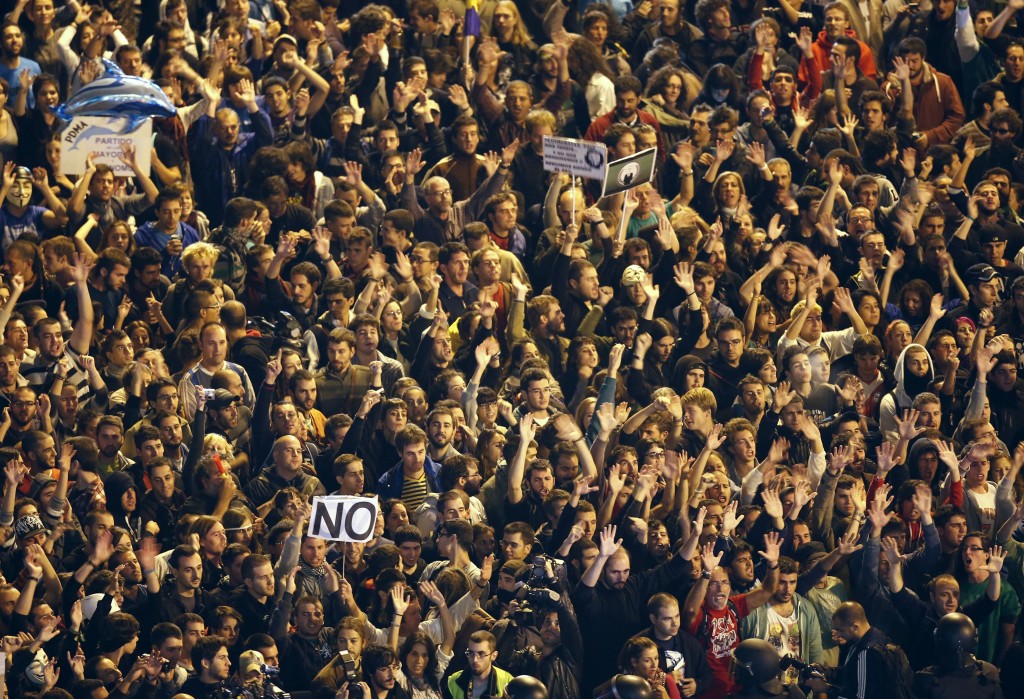
Spanish protesters in Madrid, September 25, 2012
(taken from https://publicintelligence.net/madrid-athens-protest-photos-sep-2012/)
I've noticed recently that many people are hesitant about human rights movements because they seem to be threatening to the hierarchy. They are; that's the whole point. I had a friend tell me the other day that he did not want to label himself a feminist because his experience with feminism lead him to believe that it was a movement used to give women power. I couldn't argue. That's exactly what it is. It is a movement to give power to women that should be theirs in order to enhance the balance between the sexes.

And the same things go with other human rights movements. We've all seen the argument that #AllLivesMatter. Yep, it's true; they do matter. But you do not solve issues by ignoring the central problem. Black lives matter is focused on the issue that black lives are being devalued. By arguing against the movement saying that it is too focused on one race and needs to be generalized to everyone, you are essentially continuing to devalue the same lives that need to be fought for. Claiming that black lives matter does not decrease the value of other lives, it merely focuses on the issue that black lives need to be more valued than they currently are.

And this is the same with feminism. Yes, the word feminism is gendered. It should be. By saying, human rights or gender equality, you are targeting the same issues but you are taking the focus away from the oppressed to make yourself feel better. The argument that you agree with equality but aren't a feminist is invalid. The spread of #AllLivesMatter is not really progressive at all.

I understand that as a man, the term feminism must be intimidating. You are used to the position of power and privilege that comes from being male. (Note there are other circumstances, i.e. race, sexuality, SES that can cause privilege to fluctuate, but we cannot ignore the inherent privilege that comes with being a man). It's something we have all become used to, women included, so threatening that status quo can be unnerving. But it must be challenged.

[I'd also like to take a moment to say that privilege is not an inherently bad thing. The word privilege has become synonymous with ignorance and discrimination in the social justice community. It's often assumed that the more privilege an individual has, the less they can understand or be beneficial for social justice movements. However, privilege is not a dark mark on individuals with social power, but a useful resource in the fight for equality.]

Okay now back to my point. I think the issue most people have with social movements is that they find flaws in them and therefore justify not fighting for them. But nothing is perfect, and that includes social justice. Sometimes we do the wrong things. Sometimes we fight for the wrong causes. The thing about social justice is that you need to find what you believe in and fight for that. And maybe it doesn't fall perfectly under what you think the umbrella is of feminism or civil rights or LGBT rights. Maybe you think the movements are flawed. But that doesn't mean you sit on the sideline. That doesn't mean you get to say "I believe in equality, but I'm not a feminist." That doesn't mean you get to pick and choose aspects of a movement.

It means that you dive head first into whatever cause you are fighting. You make your voice heard. You fight for truth and you point out when you think the movement might be headed in the wrong way. Advocate for change; fight for a better future. Don't disqualify yourself based on the perceived missteps or shortcomings of others. We can't solve anything when we aren't united. And you're gonna have to unite yourself with a flawed cause, but that's the only way to fix anything. 

Monday, February 22, 2016

on rape, victim blaming, and kesha rose sebert


When I walk to my car at night I pull out my keys before I even go outside and hold them in my hands, the car key held firmly between my pointer finger and thumb. I watch and listen carefully to my surroundings as approach my car. I peer into the backseat before unlocking it.

I took a psychology of gender class last summer and one of the activities we did followed the previous scenario. We were told that we were leaving the grocery store in the dark and were asked what our routine would be. The men of class stated that they merely walked out to their car, got their keys, and left. Women however, noted a more specific routine. All of us recalled retrieving our keys while in the store or while walking toward the vehicle. Some stated that they would take their hair out of a ponytail if it was in one to remove that point of attack. We would check our cars before getting in and lock the doors immediately thereafter. We live with the constant fear and awareness that we can be attacked if we are too vulnerable. This routine could make all the difference in our own safety.

The threat to women on a daily basis is astonishing. Throughout her life, a woman in the US has a 1 in 6 chance of being raped. 44% of victims (both male and female) are under 18 and 80% are under 30. In addition to the revolting statistics involving victims, there are even worse statistics related to the perpetrators. 98% of rapists will never spend time in jail for their crimes. And this is partly because 68% of assaults are never even reported.

These leads me to the question of how our society has developed so that women do not feel comfortable reporting their attackers. A woman should feel not only comfortable, but as if it is her duty to make sure that the assault is reported and that the attacker is convicted and sentenced for their actions. However, our society is set up to immediately doubt and blame victims for what happened to them.

Taken from thehollywoodgossip.com/
I was talking the other day with a friend about Kesha's recent court case and how she was not let out of her contract despite being a victim of physical and emotional abuse for several years. My friend, not being aware of the situation asked what had happened to Kesha. I explained that she had been raped by her producer and was trying to get out of her contract so she would no longer have to work with him. My friend's immediate response was "Oh, but was it consensual?" His initial and natural reaction was to doubt. It's not his fault, society has taught him this. It's taught all of us this and it is a difficult thing to unlearn. But because rape is so common and so damaging, we need to fix the way we react to it.

First, it is extremely difficult for a woman to come forward about a rape accusation. It can take years for someone to come forward with their story. This is because of the way we treat women who have claimed to be raped. Women don't feel comfortable sharing their experiences because they feel shame in the fact that they were attacked. The truth of the matter is that a rape victim should never feel shamed. They cannot be held responsible in any capacity for their attack. Revealing clothing is not an invitation. Intoxication is not an invitation. No one asks to get raped, so why do we continue to perpetuate the idea that a victim's personal behavior and decisions is what leads to their situation?

Then, once someone does come forward with a rape accusation, we look for ways to rid the accused rapist of any blame. The victim was wearing provocative clothing or was drunk or the rapist could not help their urges. We try to apologize for rapists and place blame on victims. And because of this trend, there is not a safe atmosphere for victims to tell their stories and report their abusers.

Kesha is now stuck in a contract with a man who has been abusing her for years. She is stuck there because a judge decided that the money her producer has invested in her career is more important than the career itself. The judge decided that a contract is more important than a woman's physical and emotional safety. We live in a hierarchical world, and unfortunately this world has been consistently placing rapists over their victims. This must stop. Ideally, we would rid the world of rape in general. But if this can't be done, the least we can do is make sure it's more comfortable and safe for victims to tell their stories and pursue the justice they deserve.

Friday, February 5, 2016

space cadet

saltflat
The Mirrored Night Sky © Xiaohua Zhao (China)

If you know me pretty well, you'll know that I love space. I love its vastness and its mystery. We're not truly friends until I have ranted about space and time to you. So if I haven't yet, there's something to look forward to in our friendship. Honestly though, I'm not super into the idea of studying space. I'm not worried about what materials it is composed of, the exact number of stars in a galaxy, or exactly how long it would take me to fly to another planet. Instead I prefer to ponder its mysteries and what they mean for my ideology. It is so peculiar to love something as a whole but not care for the details of its existence. I guess, in a sense, this means that I love space due to its presence in my own existence rather than its existence alone.

I love the idea that we are each a speck on the spectrum of existence. Astronomers estimate there are around 100 billion galaxies in the universe. Yet, despite the infinite quality of space and time, each of us were brought into this time, in this space for a reason. We are just a speck among the vastness, but how beautiful it is that we even exist at all.

One of my favorite lines of poetry is the following:

Though my soul may set in darkness, it will rise in perfect light;
I have loved the stars too fondly to be fearful of the night.

from An Old Astronomer to His Pupil by Sarah Williams

To me this verse represents allowing the vastness and darkness of the universe to represent something brighter and more joyful. I think many people are terrified by the idea of space and its mysterious qualities, but I have always been intrigued and drawn to that mystery. I have truly "loved the stars too fondly to be fearful of the night." And I guess the reason I love the stars so much is because their existence means I exist as well.

But this admiration of our universe and my frustration with the current state of our earth lead me to do some writing of my own. It's a little different than anything I have ever posted and I'm actually quite terrified to be posting it, but I've been thinking a lot about vulnerability so I can't back out now. So here is something I wrote recently that doesn't really count as poetry and doesn't really count as prose. In all honesty I don't even know what it is. Please bear with me.

Gravity

Most people are scared of the dark because it represents the unknown
but I've always found it comforting that there is so much more out there

The night sky glitters with the promise of distant galaxies
and for me 197 million square miles of earth just doesn't seem like enough

I want to travel all across the world
I want to see history and I want to experience culture
I want to escape my own life and live the lives of others
Distant lands beckon me
the spirits of the past, present, and future call out my name
my arms reach out in longing, but my feet are nailed to the floor

I am stuck here in a lousy city in a country so proud of itself that people are ignoring the fact that it's dying
We have lost touch with each other
We care more about our own advancements than the people dying in our wake
I want to incite change
But I just can't figure out how

So I want to travel the world
And when I'm done with the earth
I want to escape her grasp as well

To fly among the stars
To experience the vastness of our universe
To simply escape would mean so much more than a world crumbling underneath my feet

Gravity is the only thing keeping me down.